
Space exploration has always been an exciting subject, but this topic has recently become even more popularized by Andy Weir’s best-selling book and the subsequent award winning movie, The Martian. Set in the near future, it tells the tale of Mark Watney, an intrepid astronaut who is reasonably left for dead by his colleagues during an exploration of Mars. Through his own Robinson Carusoe-like ingenuity, Watney must learn to survive on that far-away planet until, hopefully, he will be rescued.
I enjoyed the book as well as the movie, but each can leave you wanting to learn more about the real history, current state and future of what many consider to be the ultimate adventure. Weir’s fictional work was backed by research, but how great would it be to learn more about space exploration from an insider’s eye witness account?
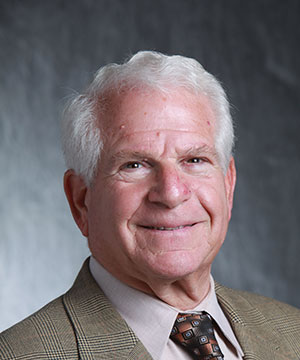
A couple of weekends ago, my husband, friends and I were happy to attend a fascinating lecture on this subject by Dr. Lester Gerhardt, Rensselaer Polytechnic Institute professor emeritus of electrical, computer, and systems engineering. Dr. Gerhardt quickly engaged his audience of both kids and adults with informative and entertaining recounts of his own involvement in the space race. Dr. Gerhardt’s career started at Bell Aerospace Corporation, where he helped develop the visual simulation of the first moon landing of the Lunar Excursion Module. Apollo 11’s Neil Armstrong and Buzz Aldrin along with others practiced their lunar landing by using both visual and physical simulators designed and developed by Bell and other companies. He joined RPI in 1970, and has spent more than 40 years at this university combining teaching, sponsored research, and academic administration. More recently, he won the prestigious Benjamin Garver Lamme Award and Medal, the highest highest award bestowed by the American Society for Engineering Education.
Dr. Gerhardt initially discussed the nature of space itself, which starts about 50 miles above the earth. Airplanes won’t work at that height because their controls are ineffective without our atmosphere. As a result, a new form of aeronautics called aerospace was needed. He spoke of the war time transformation of aeronautics into aerospace with the creation of the V-2 Rocket in 1942 by German rocket scientists Wernher Von Braun and Walter Dornberger. Both would relocate from Nazi Germany to the United States to respectively become a NASA leader and the vice president at Bell Aerospace Corporation.Dr. Gerhardt would eventually work for Walter Dornberger at Bell, visited many times by Wernher von Braun, all working on the Apollo Program.
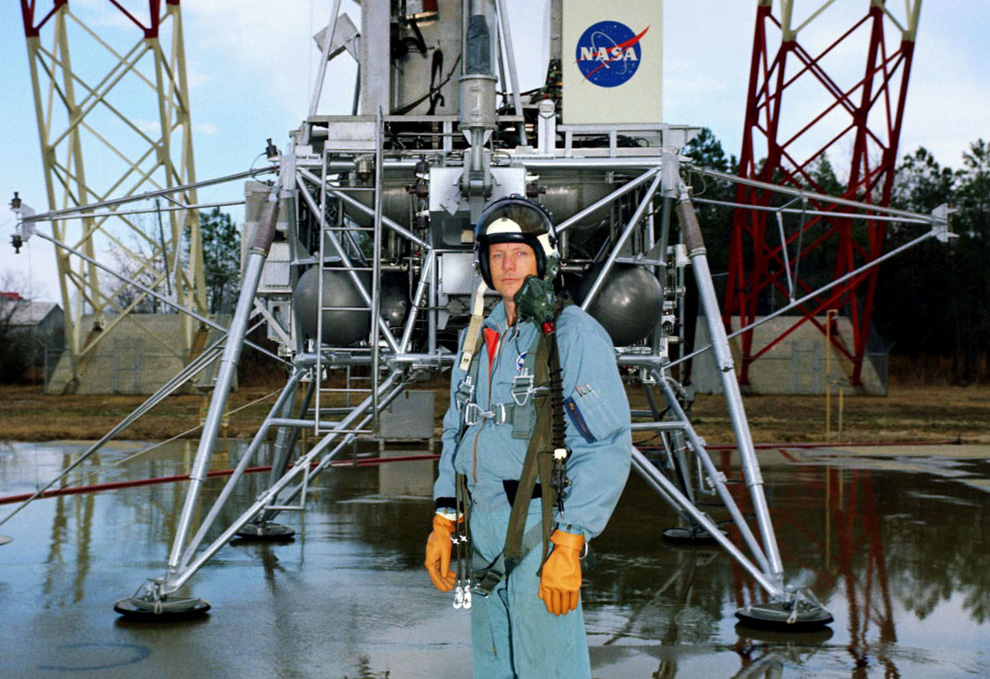
Along with offering an overall history of the space program and a more detailed description of the Apollo missions, the lecture was peppered with interesting anecdotes, including the time that Neil Armstrong needed to eject form the Lunar Landing Research Vehicle, a physical simulator. Later Armstrong would be required to manually land the space module on the moon. He later acknowledged that the Lunar Landing Research vehicle (LLRV) had furnished essential training for him to safely achieve this goal.
I was also interested to learn how many space trail blazers had graduated from RPI. The list included not only several astronauts but also the legendary George M. Low, Deputy NASA administrator and the 14th president of RPI. Low was an instrumental figure in the early development of space flight, and the University has a private gallery to honor his achievements and display some of his personal mementoes.
This was an enjoyable experience, and I hope Dr. Gerhardt provides our community with more of these memorable lectures.
 Travel Gal Kim Swidler