
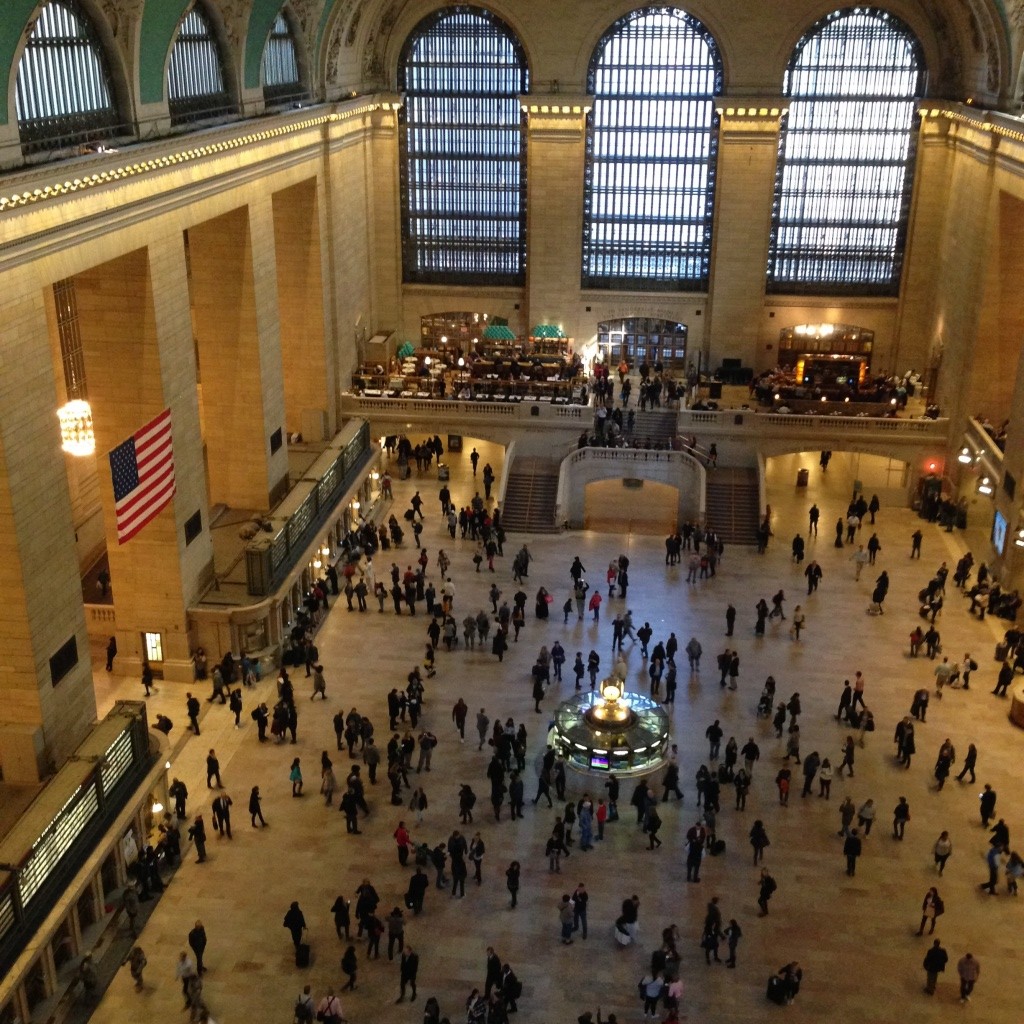
Grand Central Terminal’s annual Holiday Market is currently underway. And, while thousands of national and international shoppers have been pursuing these 70 plus gift filled stalls, few of them have been aware of the secrets that this iconic landmark has been hiding high above, far below, and even in plain sight.
A little while ago, my friend and I were treated by Daniel Brucker of MTA Metro-North Railroad to an amazing tour of this grand dame of U.S. transportation hubs. We met Dan at the Station Master’s Office along with a group of engineers who were also participating. And, as soon as this whirlwind event began, we all ran with Dan as he revealed secret after secret of this beautiful historic building.
Built in the early 1900s by the Vanderbilt family and ultimately saved from demolition by a group that included Jackie Kennedy Onassis, Dan first wanted to make it clear that we knew that Grand Central was not a “station”, but instead a “terminal” because trains ended or terminated there. Dan told us that more than 750,000 visitors (the approximate population of San Francisco) walk through those doors each day for transportation but also to enjoy boutique restaurants and cocktail lounges, a gourmet market, and many specialty shops.
Grand Central’s Generator during WWII
Our group followed Dan as he took us 9 flights of stairs below the surface to view one of the original generators that helped power the trains that ferried troops during WWII into and out of New York.
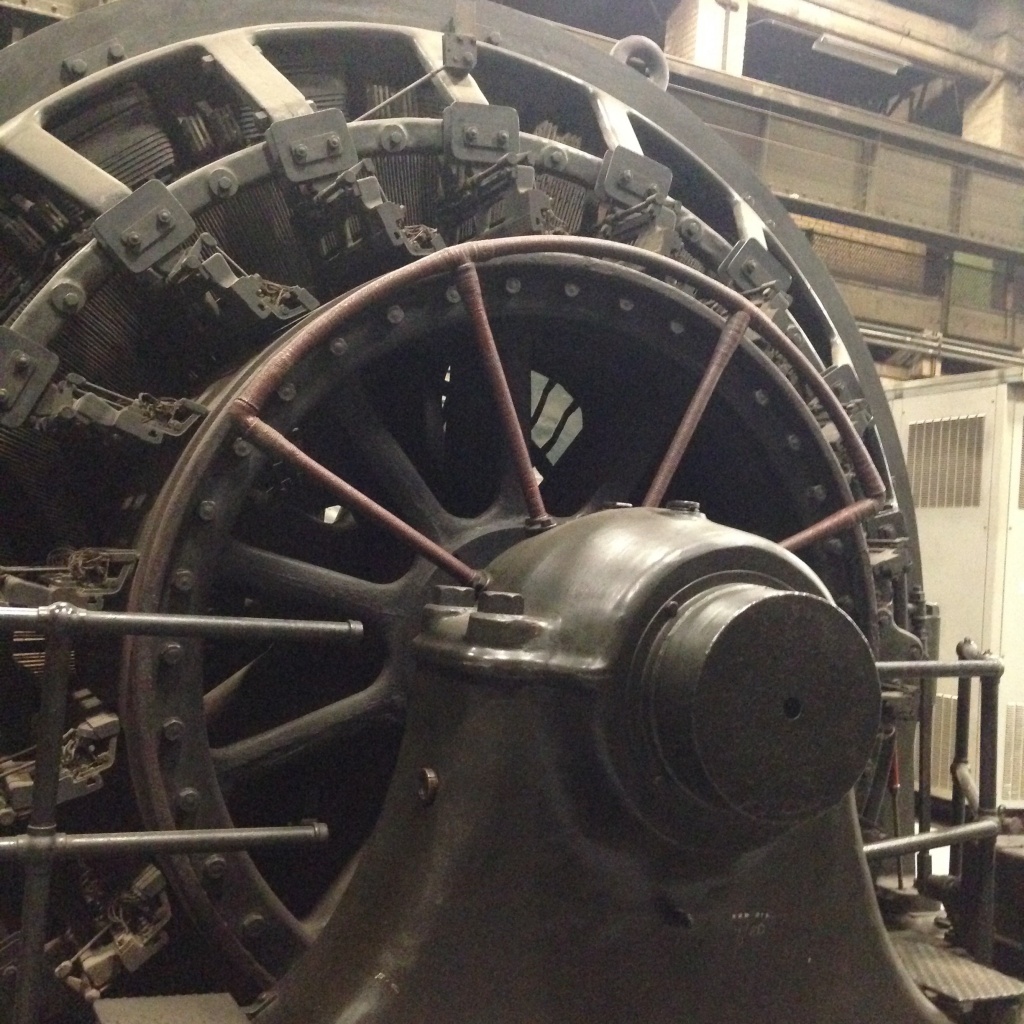
At the time, this area had been very heavily guarded. It was with good reason, because Hitler had unsuccessfully sent men to destroy the generators by throwing sand into them. Why sand? As Dan explained, contact with the hot generators would have caused severe damage because this heat would have turned the the sand into glass.
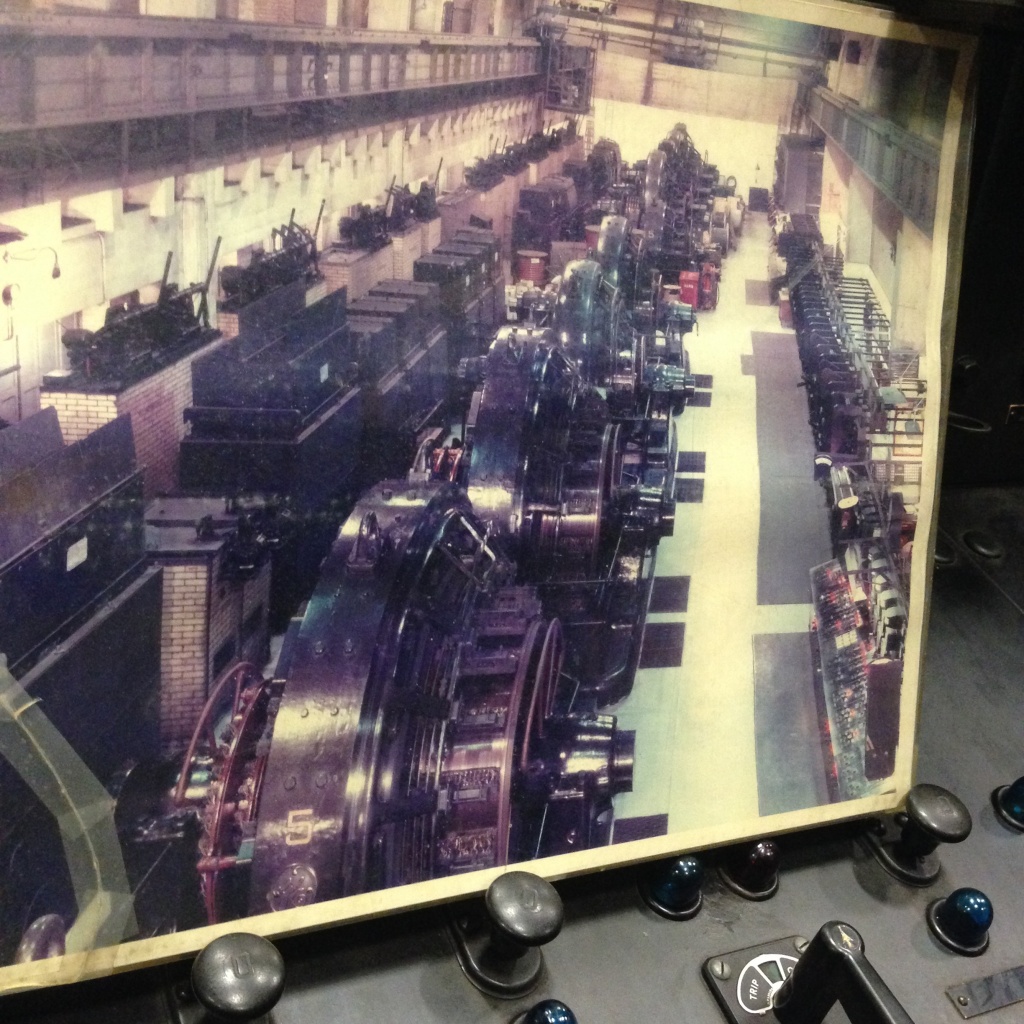
The world’s first computer
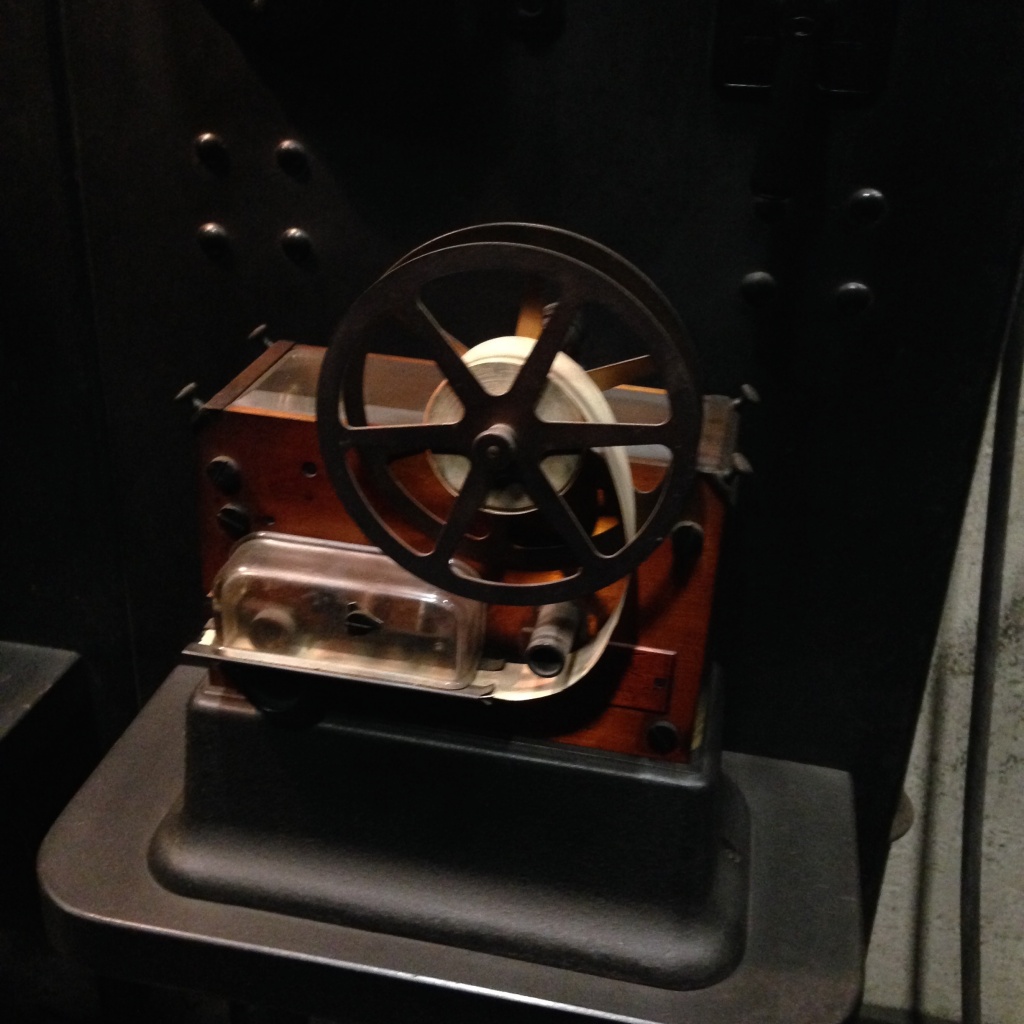
Still deep in the basement of the Terminal, Dan then showed us even older equipment that had been built in 1913. Each year, Representatives of Apple visit to pay homage to this machinery because what they consider it to be the first “computer”.
Dan told us that, when Grand Central was built in the early 1900s, radio communications had not yet been invented. As a result, if a train was lost on the 33 miles of track or tunnels, it could be incredibly difficult to discover that something had gone wrong and where to look for the incapacitated machine.
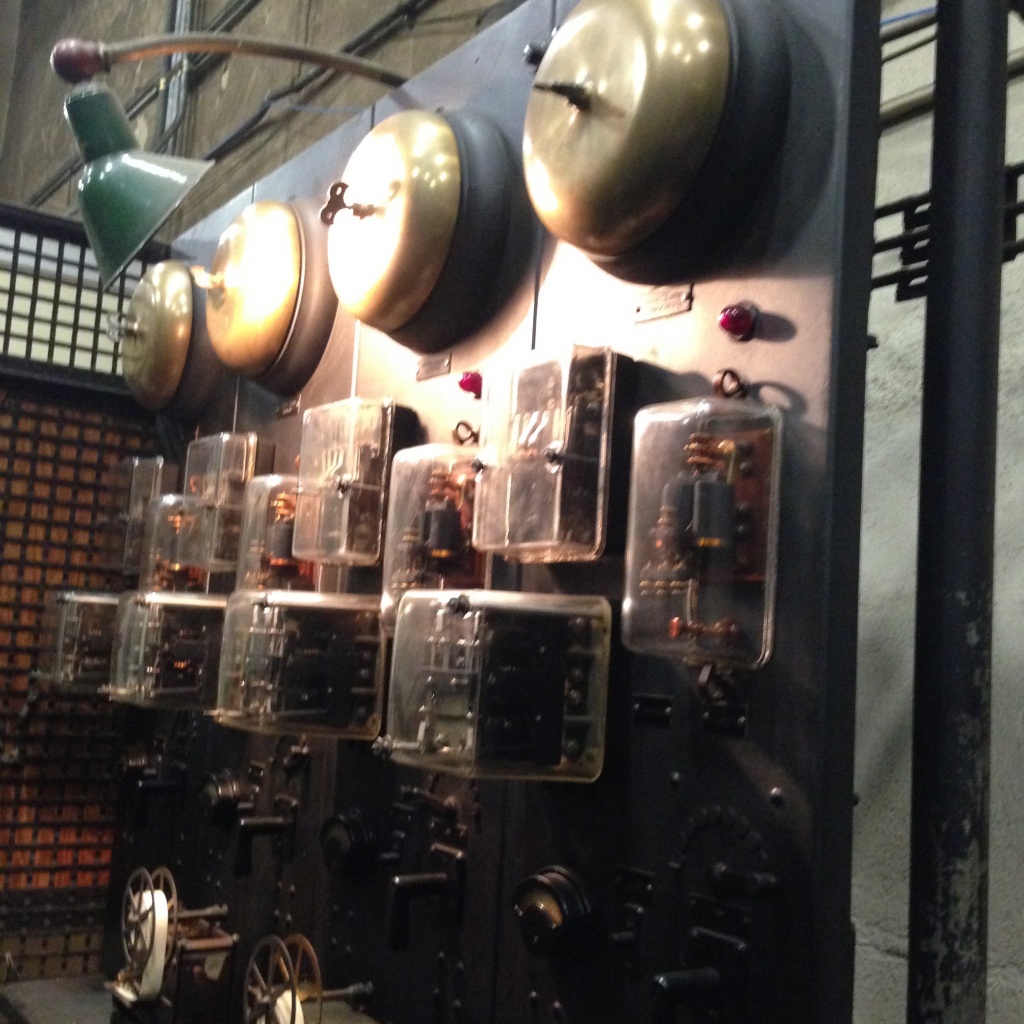
In order to keep the trains running on time,Westinghouse Electric built a system in 1913 that involved brass bells under the station that could be triggered by the conductors on the cars themselves. If a problem occurred, the conductor could pull a cord which rang the bell in the control center.

A built-in telegraph system would then provide the location of the distressed train to the terminal. The train would then be tracked down and a crew would be sent to fix the problem.
Then, after a great visit to one of the Terminal’s sky walks, Dan continued to provided us with his slew of fascinating facts:
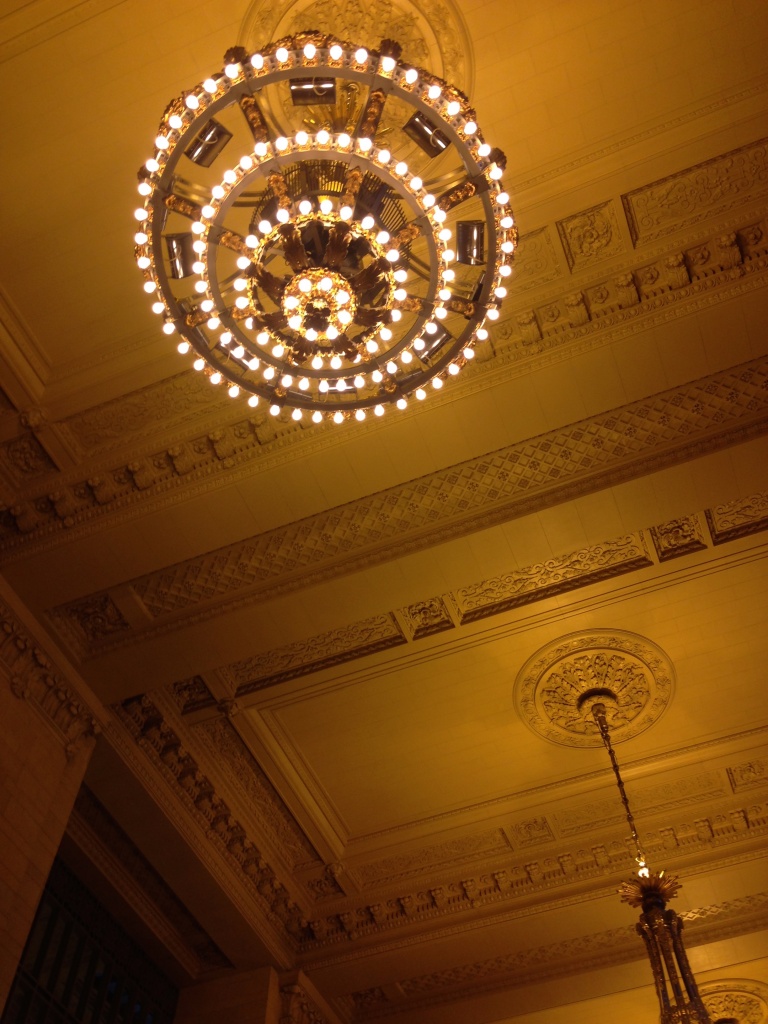
- The most prominent motif that dots the terminal is the oak leaf because that was the Vanderbilt’s family symbol.
2. The clock on the top of the Terminal’s central information booth is comprised of Opal panels that are together worth about $20 million.
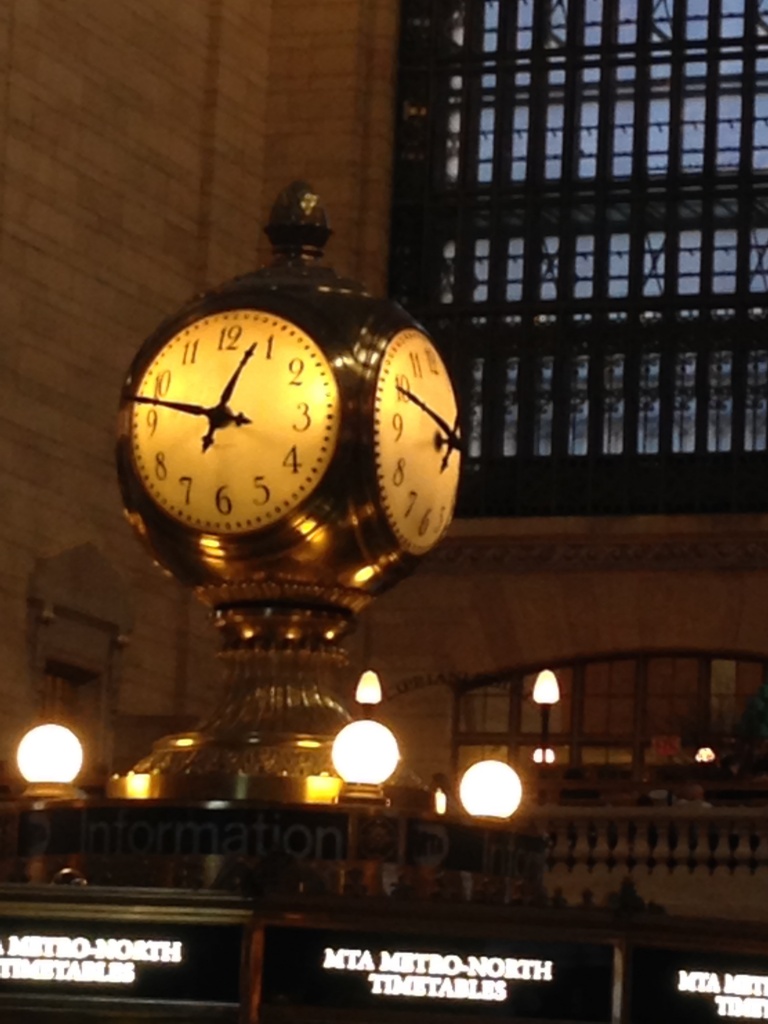
2. A secret stairway lies under this information booth.
3. The ceiling was cleaned up after its renovation but a dark line was left to remember what it used to look like. What had created the line? Not soot or pollution created by the trains but cigarette smoke!
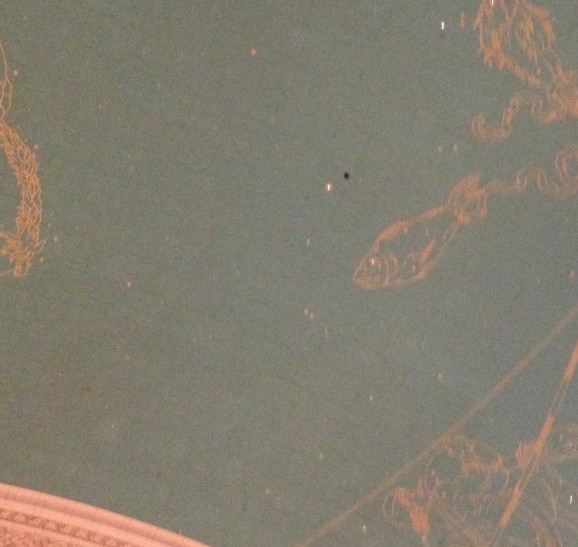
4. The ceiling depicts the constellations of the universe but it’s inaccurate because it was painted in reverse. When this was pointed out, the Vanderbilt family smoothed over this faux pas by saying that they knew of this all along and that it was created as if God had been looking down on the stars.
5. The ceiling also has a hole in it because, in 1957 during the space race, a Redstone Rocket was brought in for display.

The rocket was too big, and it created this hole that still exists.
Thanks Dan for a wonderful tour!
 Travel Gal Kim Swidler
2 responses to “NYC: Secrets Found in Grand Central Terminal 2015”
The guide’s name is Dan Brucker, not Bruckner.
The conductors would pull a cord, not a chord.
Also, I know they make a big deal about the “first computer” but it’s really not a computer. It’s a telecommunication device, which as far as I know cannot be programmed to do anything else.
LikeLike
Thanks so much for catching those errors! I understand what you’re saying, but it was explained that Apple and others consider this over 100 year-old piece of machinery to be a computer because it could “compute” the train’s exact location.
LikeLike