
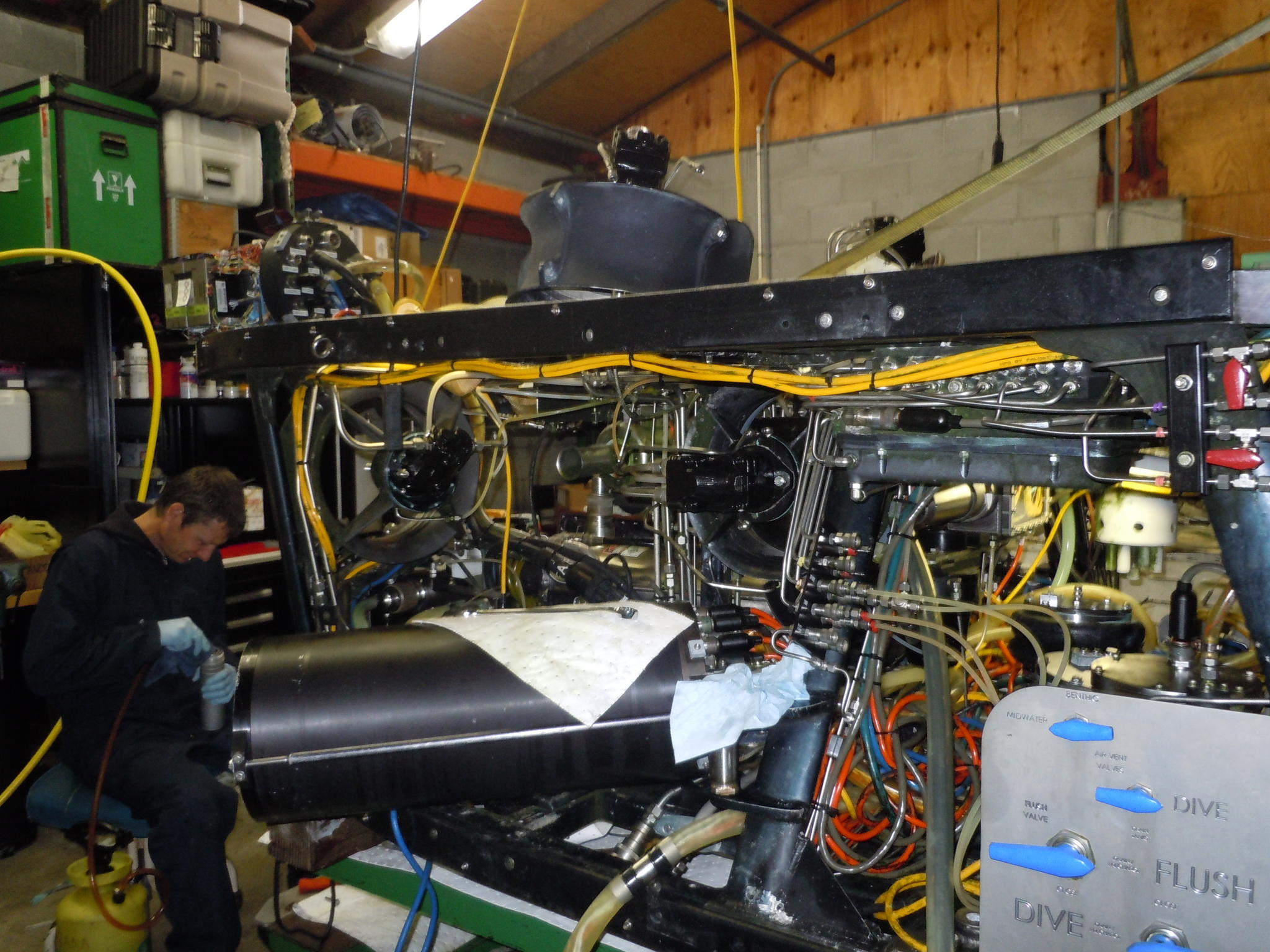
We were told that Ventana has had more than 3,000 research dives, making it the most successful ROV. The ROV’s pilot, Knute Brekke, explained that, in order to properly navigate the Ventana, he needed to have knowledge of the same elements required to fly a helicopter.

While walking around the ROV, I saw that Ventana had its own “figurehead,” much like the front of an old ship. Only instead of an intricately carved front of a beautiful woman, they had strapped to the ROV an Olive Oil doll! I wondered how the aquatic life living 4,000 meters below reacted when they took a first look at her.

Earlier in our tour, I talked to Knute about his experiences traveling inside a manned submersible, the Alvin. Knute described it as a great experience, but pretty crowded because you needed to fit three people, including the pilot, into a very small area. He remembered that, initially, you’re very hot because of the lack of space,and then the temperature gets colder and colder the farther down you go. What did people including men wear to keep warm before the specialized thermal clothing? Pantyhose!
We eventually said goodbye to Knute, and Nancy Barr took us to a series of submersibles that were not teathered, but were, instead, controlled through computerized commands.
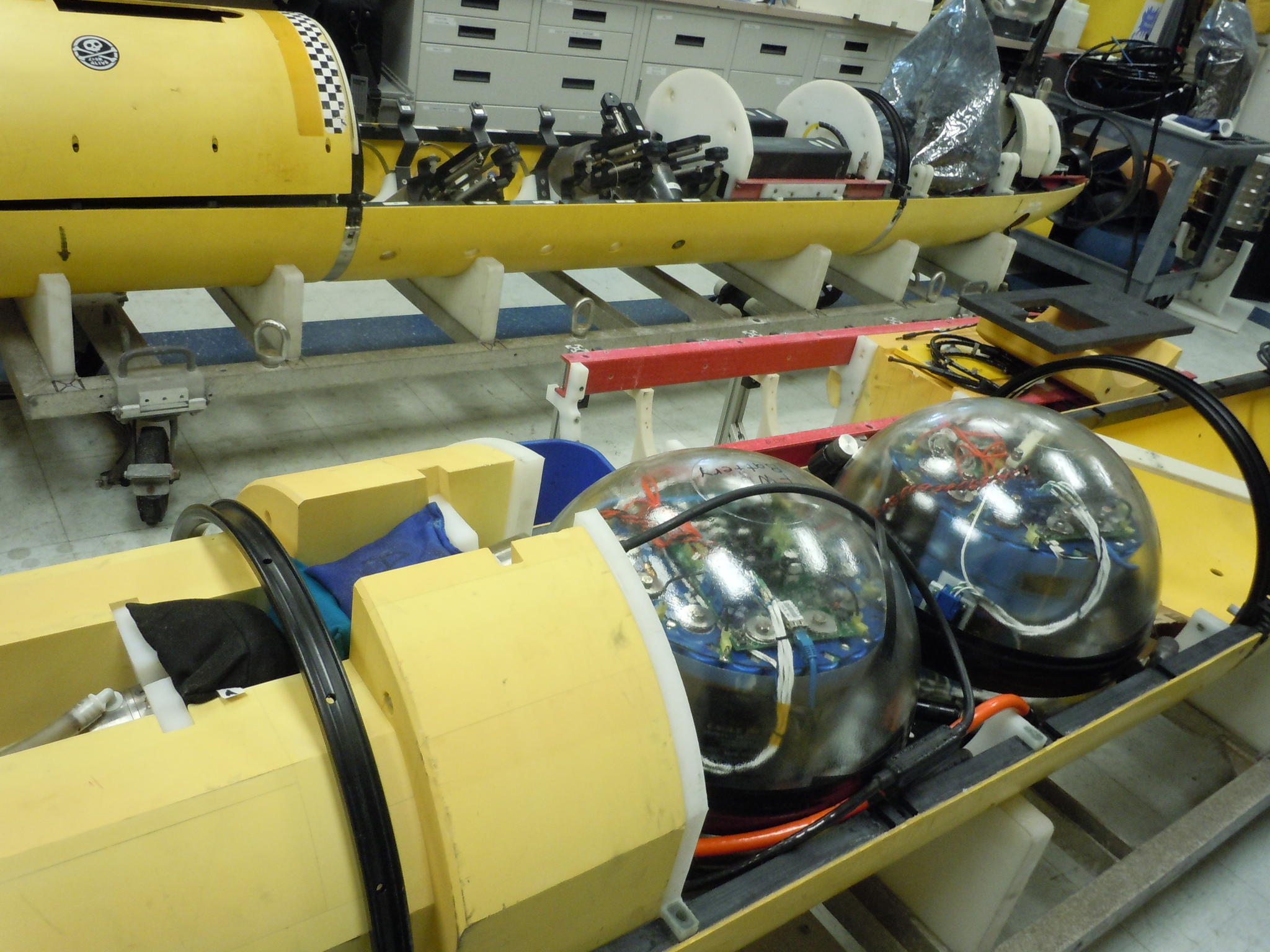
- “autonomous underwater vehicles”
We visited other parts of the MBARI’s main building, and we then met with Susan von Thun whose job it is to review the video footage obtained by the Ventana and to identify and categorize the new life forms that were filmed.
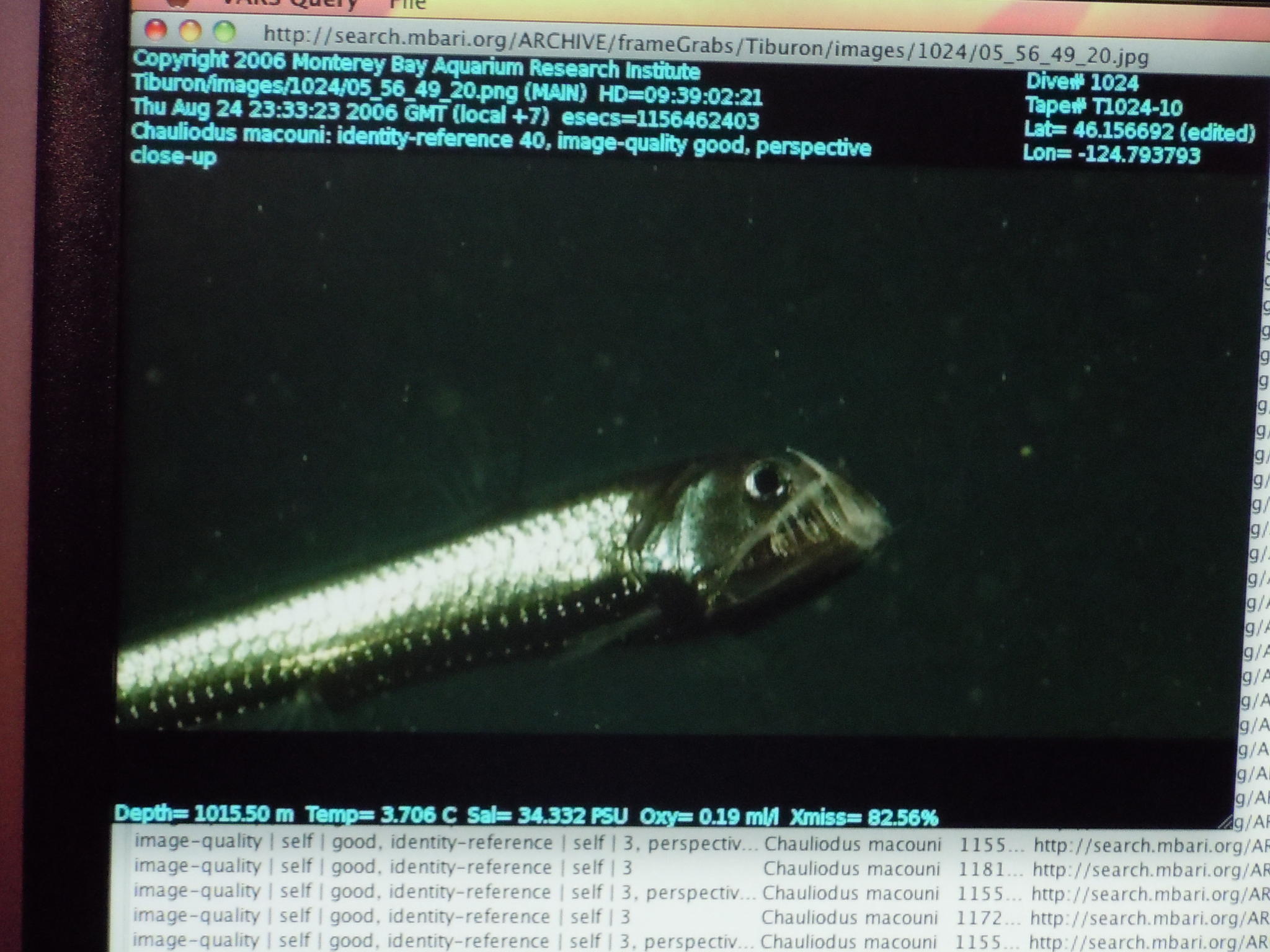
While speaking with Susan we had a chance encounter with a member of the Intergovernmental Panel on Climate Change (IPCC), the organization that won the Nobel Peace Prize in 2007 with Al Gore.
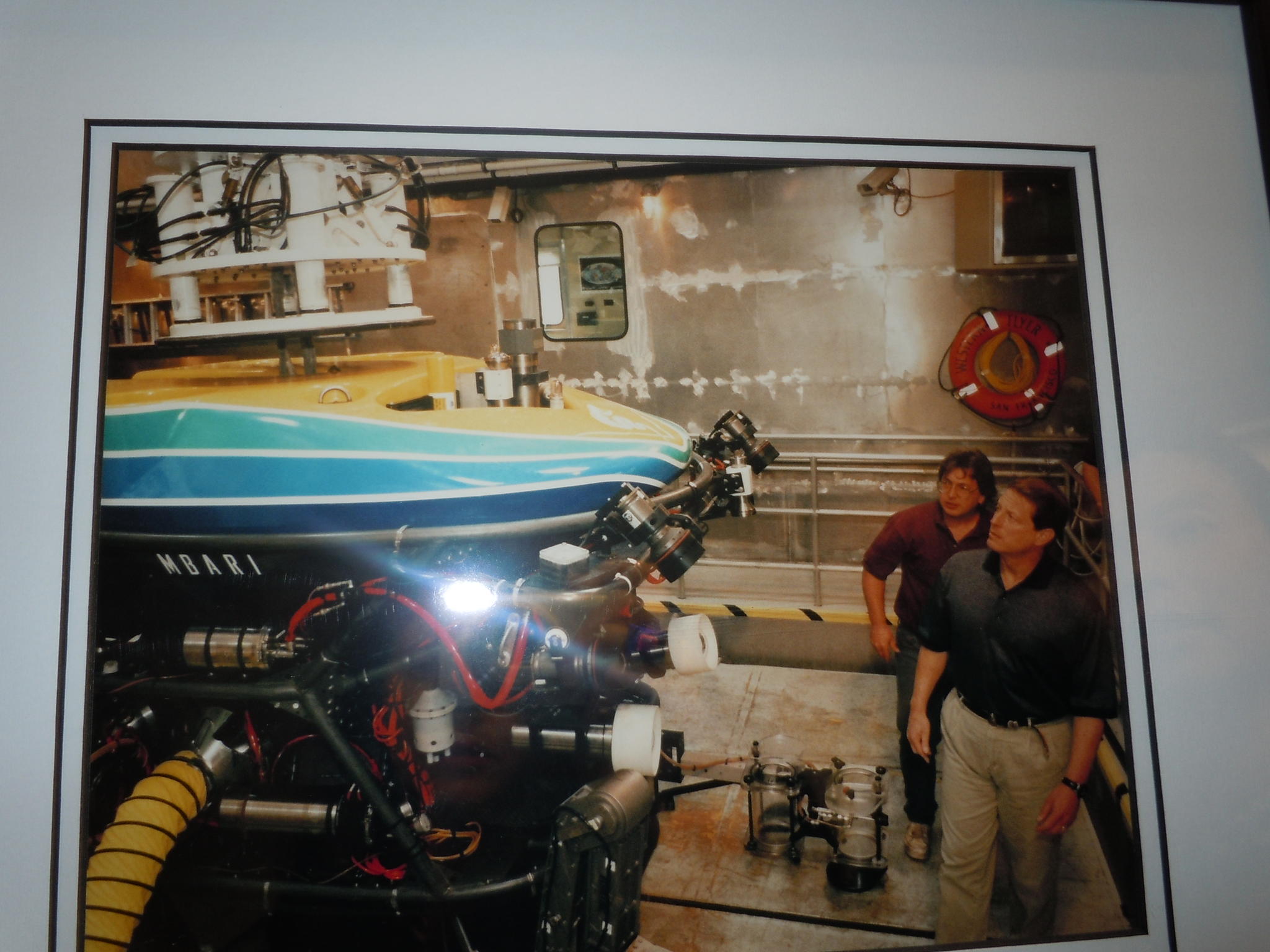
Thanks so much to all of the members of MBARI who made our tour possible including Nancy Barr, Knute Brekke, Susan von Thun, and Kim Fulton-Bennett who initially organized our visit.
 Travel Gal Kim Swidler