
If you’ve read some of my posts, you know that I have a great love for deep sea exploration, and, for years, I’ve wished to someday travel in a submersible far beneath the sea. I appreciate the desire for space travel, but I believe that we still have so much more to discover on our own planet-especially since the majority of our world is covered in waters that have hardly been explored.
Last month, I was treated to an experience that brought me even closer to my dream-a private tour of the world renowned center for deep sea scientific research-the Monterey Bay Aquarium Research Institute or MBARI, located in Moss Landing, California, 20 miles north of Monterey Bay.
For MBARI, Monterey Bay has provided an ideal living laboratory for deep sea exploration because it contains a canyon that is almost as deep as the Grand Canyon in which there are some of the most biologically diverse inhabitants in the world. This is where many forms of aquatic life have been newly discovered.
Founded in 1987 by David Packard, of the computer giant Hewitt Packard, MBARI’s mission is to combine the efforts of both scientists and technologists to further its goals for state of the art marine research. Packard, however, did not wish to use manned submersibles because he considered them to be too dangerous. He felt that it was one thing to lose a hugely expensive piece of equipment, but the loss of a life was simply too high a risk.
So MBARI’s exploration is mainly achieved through the use of teathered robotic submarines like the one named Ventana which means “window.”
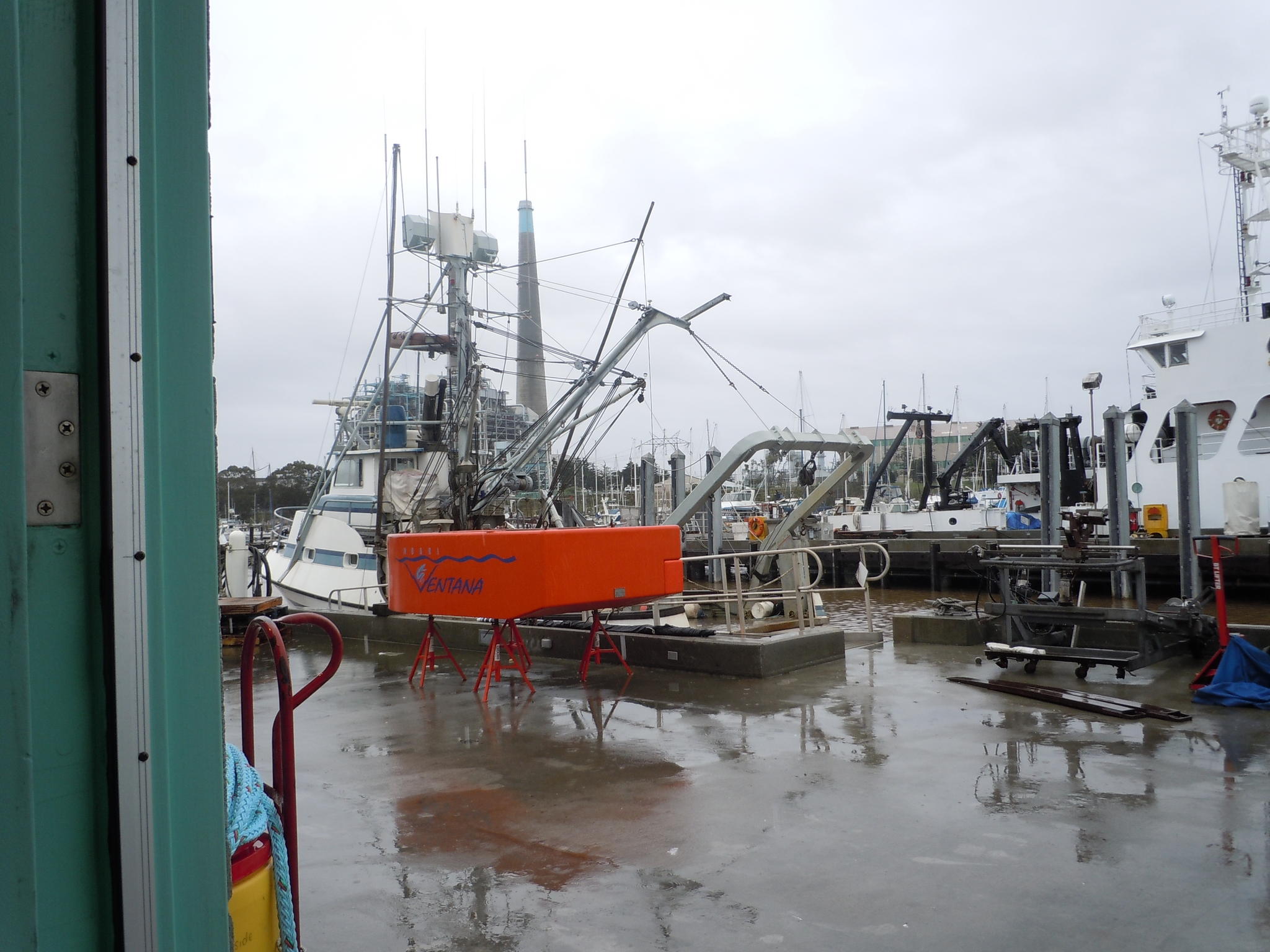
After driving about two and half hours in heavy rain from San Francisco, we were met by Nancy Barr, MBARI’s Web/Print Project manager, who generously became our tour guide for this amazing event.
After Nancy gave us a history of MBARI and its many achievements, we boarded the Point Lobos, the oceanic research ship that guides the Ventana. We had lucked out-the ship was still docked because the Ventana needed repairs that day.
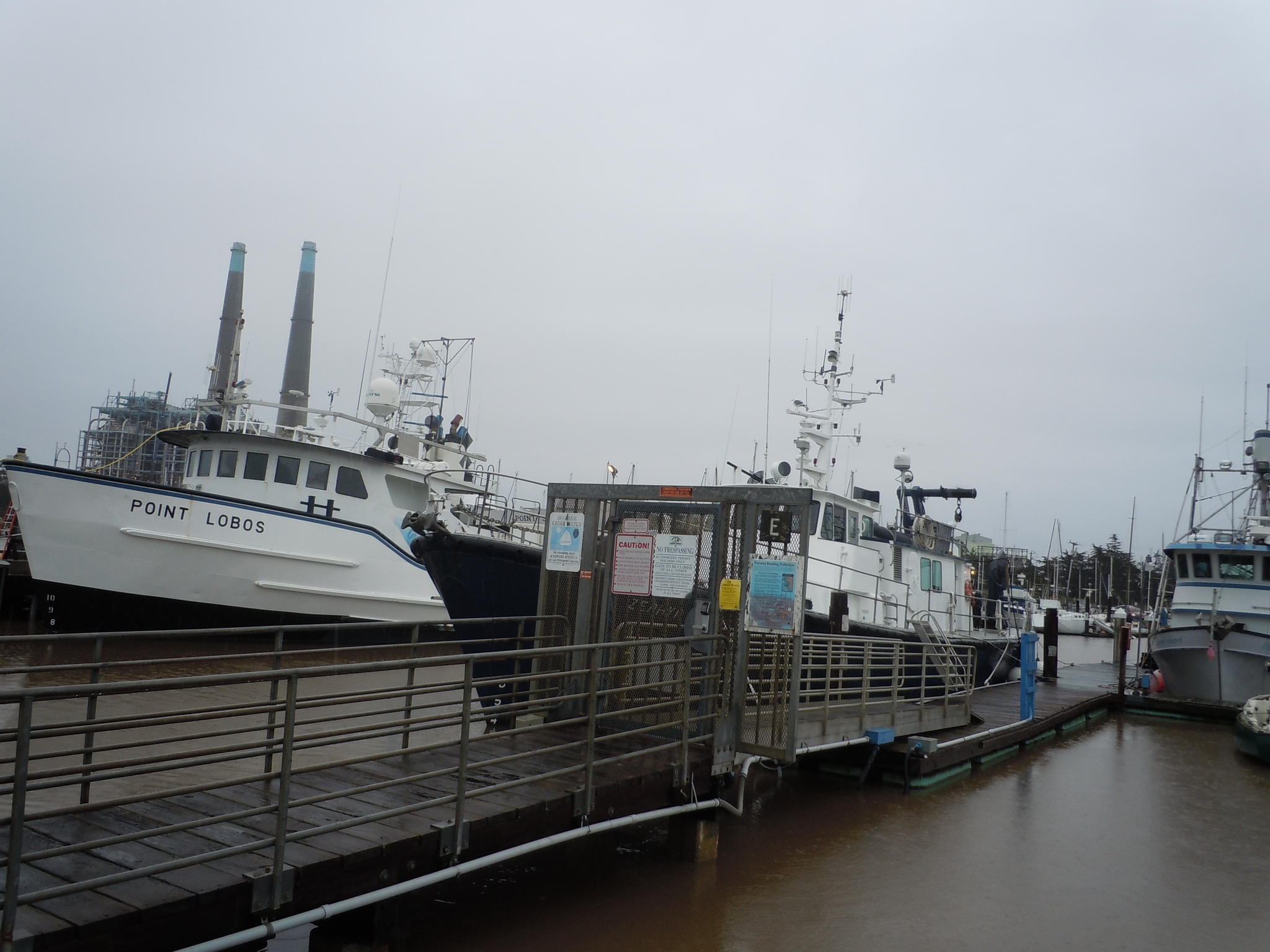
Once on board, we met Knute Brekke, Ventana’s pilot, and he gave us a tour of Point Lobos. Knute explained that the sleeping berths of this former oil supply ship from Louisianna had been taken out to accomodate the needed scientific equipment. This was fine with the crew because this meant that each expedition only lasted a day and that they could go home at night.
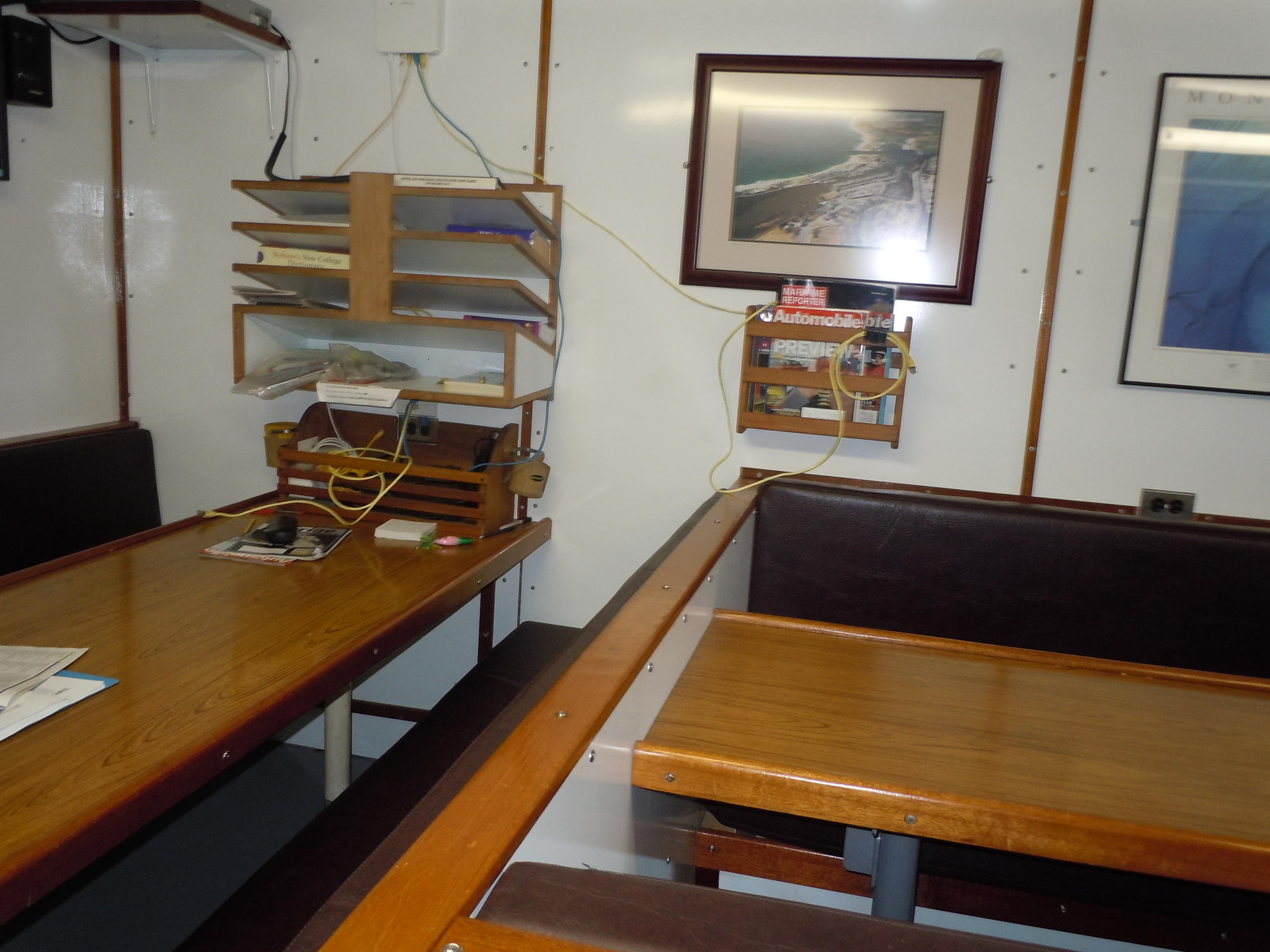
Knute noted, though, that the crew would at times use the ship’s benches to rest because sea sickness was a hazard on the light, rocking vessel.
Knute took us to the control center of the ship, and he showed us various forms of equipment including the area that controlled the Ventana. Knute explained that the ship generally travels a route around Monterey Bay and, through the use of the Ventana, the crew observes and films the depths below.

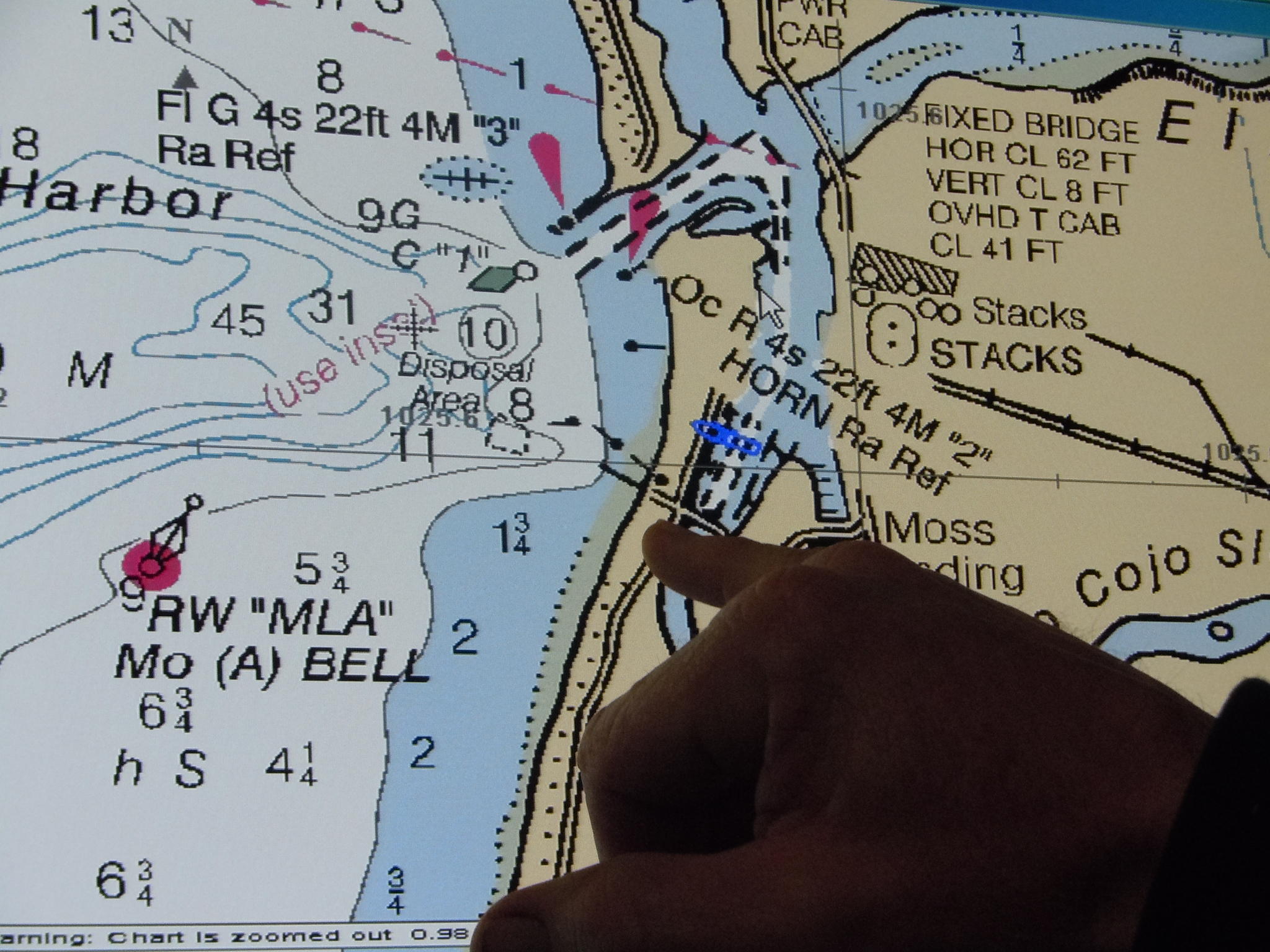
There was also a form of GPS that could provide him with a location of the ship in Monterey Bay. 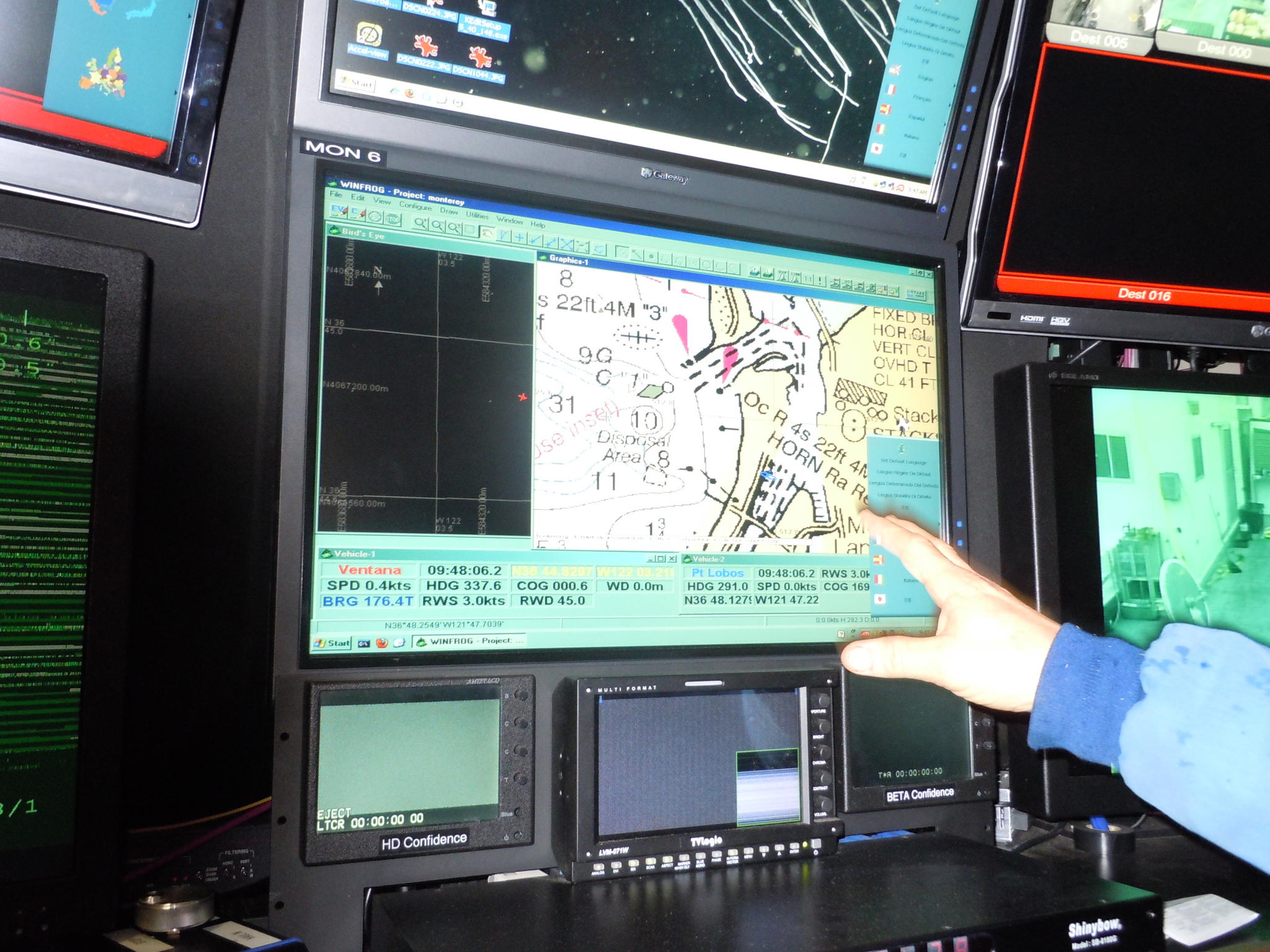
I was having a great time, but we needed to move on if we were going to see everything. So we eventually left the Point Lobos to continue our tour of MBARI.
Next: Getting a close-up of the Ventana, looking at computerized ROVs, seeing how the filmed information is used, and having a chance encounter with a Nobel Prize winner.
 Travel Gal Kim Swidler